HERITAGE
The Three Monasteries of Waldiba
A Sacred Legacy of Faith, Asceticism, and History
The Three Monasteries Located within Waldiba
Among the three monasteries known by the revered name Waldiba, the first and primary monastery—distinguished by its vast history and the performance of many miracles—is Waldiba Abrentant. This holy monastery was established in 485 E.C. by monastics who journeyed from Bulga in Shewa, laying the spiritual foundation for the Waldiba monastic tradition.
Over the centuries, two additional monasteries emerged within the greater Waldiba territory: Dalsha Waldiba and Waldiba Sequar. Each arose under unique historical circumstances while remaining spiritually connected to the mother monastery, Waldiba Abrentant. Together, these three monasteries form a sacred heritage of ascetic life, prayer, and unwavering devotion.
Waldiba Abrentant (Primary Monastery)
The Mother and Primary Monastery
Waldiba Abrentant is the first and principal monastery bearing the name Waldiba. Founded in 485 E.C., it was established by holy monastics who came from Bulga, Shewa, seeking a life of deep asceticism, prayer, and spiritual struggle.
This monastery is renowned for its long and continuous monastic history, its strict ascetic traditions, and the numerous miracles associated with it. As the spiritual mother of the Waldiba monastic family, Waldiba Abrentant became the source from which other monastic communities later emerged.
For centuries, monks lived in caves and remote dwellings, enduring hardship in devotion to God. The monastery became a center of spiritual authority and discipline, shaping the monastic identity of Waldiba and guiding the faithful through prayer, teaching, and example.


Dalsha Waldiba Monastery
The Monastery Founded Through Separation
The second monastery is known as Dalsha Waldiba, whose origins date back to 1505 E.C. During this period, an effort was made within Waldiba Abrentant to unify forty-one Tabots (Arks) so that the monks would pray exclusively before the Tabot of Kidane Mihret (Covenant of Mercy), which is currently kept together with the Tabot of Abune Gebre Kristos.
However, one of the three monastic communities refused to abandon their specific Tabot, holding firmly to their spiritual tradition. As a result, they separated from the main monastery of Waldiba Abrentant.
This group subsequently founded Dalsha Waldiba, settling permanently in its present location in 1505 E.C. Despite the separation, Dalsha Waldiba maintained the core monastic values of Waldiba, continuing a life devoted to prayer, ascetic discipline, and spiritual service.


Waldiba Sequar Monastery
A Monastery Born from Compassion and Endurance
The third monastery, Waldiba Sequar, was not established by monks coming from outside Waldiba. Rather, it was founded by monastics who branched out from their fathers at Waldiba Abrentant.
The reason for their departure was rooted in compassion and necessity. While living in caves, some monks suffered from illness and the harsh intensity of the sun. Unlike the Dalsha community, these monks did not fully abandon the original monastic territory. Instead, they settled in an area known as Sequar in 1658 E.C.
Initially, their fathers and brothers at Waldiba Abrentant withheld permission for them to establish a separate monastery or to plant a Tabot, saying:
“You shall not establish a new monastery separate from us or plant a Tabot.”
As a result, the monks of Sequar lived for 107 years without a Tabot, using only a Si’il Bet (House of Icons/Images) as their place of prayer. Despite this hardship, they persevered in obedience, humility, and faith.
Imperial Recognition and the Planting of the Tabot
During the reign of Emperor Menane Mengist Tekle Haymanot, the monks of Waldiba Sequar petitioned the Emperor, saying:
“Our fathers have forbidden us from establishing a Tabot; we have no place to receive the Holy Communion, the Body and Blood of our Lord. We humbly ask for permission to plant a Tabot.”
Moved by their plea, the Emperor granted them permission to demarcate their boundaries alongside their fathers’ land and to officially establish their Tabot, thereby recognizing Waldiba Sequar as a full monastery.


Menane Mengist Tekle Haymanot
The King Who Became a Monk
The very Emperor who granted this sacred permission, Menane Mengist Tekle Haymanot, was later dethroned and exiled by Ras Goshu and Dejazmach Wondwossen in 1769 E.C.
Following his exile, the Emperor entered Waldiba Sequar Monastery, choosing a life of asceticism (Menane). He received the monastic habit at the hands of Memhir Awse and devoted the remainder of his life to prayer and humility.
He passed away in 1770 E.C. and was buried within the monastery. For this reason, he is remembered and honored as “Menane Mengist” — the King who became a Monk.
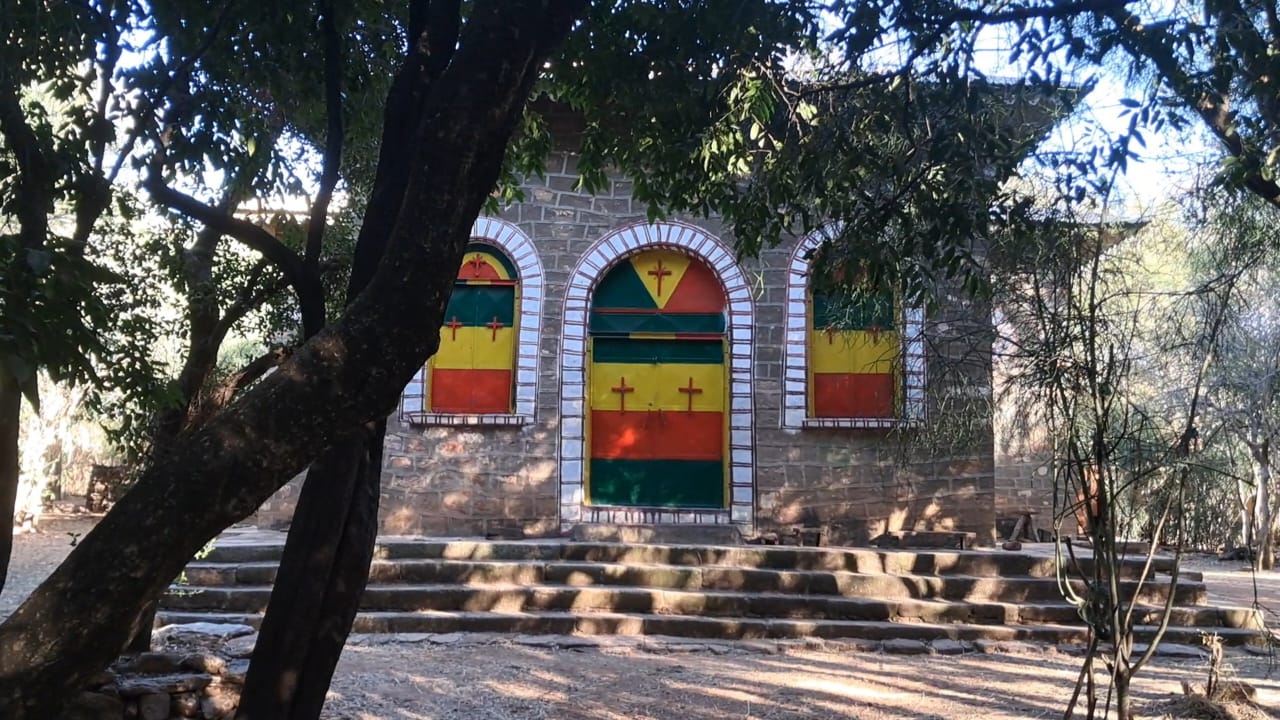
The tombs of Emperor Menane Mengist Tekle Haymanot and his brother, Fetsame Mengist Tekle Giyorgis, are preserved with great reverence in a specially constructed house within Waldiba Sequar Monastery, standing as a lasting testimony to humility, repentance, and devotion to God.